
Welcome to your comprehensive Carthage Tunisia history guide, where ancient legends meet Mediterranean shores. Founded by Phoenician settlers in 814 BCE, Carthage rose to become one of the most powerful cities in the ancient world, challenging Rome itself before being rebuilt as a magnificent Roman provincial capital. Today, this UNESCO World Heritage Site offers travelers an extraordinary journey through layers of civilizations just 15 kilometers from modern Tunis.
This Carthage Tunisia history guide will walk you through millennia of history, from Phoenician trade empires to Roman grandeur, helping you plan an unforgettable visit to one of North Africa’s most significant archaeological treasures.
Ancient Carthage: Phoenician Origins and Rise to Power
According to ancient sources, Carthage was founded by Queen Dido (Elissa) from Tyre in 814 BCE. The Phoenicians chose this strategic location on a peninsula jutting into the Gulf of Tunis, creating one of the ancient world’s most important trading hubs. The name “Carthage” derives from the Phoenician “Qart-Hadasht,” meaning “New City.”
By the 4th century BCE, Carthage controlled extensive territories across North Africa, southern Spain, Sardinia, and western Sicily. The city’s wealth came from maritime trade, with Carthaginian merchants dominating Mediterranean commerce. Archaeological evidence suggests the city’s population reached between 250,000 to 400,000 inhabitants at its peak, making it one of the largest cities of antiquity.
Expert Insight: Many visitors mistakenly believe all of ancient Carthage was destroyed by Rome. In reality, significant Punic remains survive beneath Roman layers, including the Tophet sanctuary and portions of the Punic ports, offering tangible connections to Phoenician civilization.
The Punic Wars and Carthage’s Legendary Conflict with Rome
The three Punic Wars (264-146 BCE) defined Carthage’s fate and reshaped Mediterranean history. The First Punic War (264-241 BCE) saw Rome challenge Carthaginian naval supremacy, ultimately forcing Carthage to cede Sicily. This conflict established Rome as a major Mediterranean power.
The Second Punic War (218-201 BCE) witnessed Hannibal’s legendary crossing of the Alps with war elephants. According to historical accounts from Britannica, Hannibal won major victories at Cannae and Lake Trasimene, terrorizing Rome for 15 years. However, Scipio Africanus eventually defeated him at Zama in 202 BCE.
The Third Punic War (149-146 BCE) ended with Rome’s total destruction of Carthage. Roman senator Cato the Elder famously ended every speech with “Carthago delenda est” (Carthage must be destroyed). In 146 BCE, after a three-year siege, Roman forces razed the city, allegedly sowing salt into the earth—though modern historians question this dramatic detail.
Hannibal’s Enduring Legacy
Hannibal Barca remains one of history’s greatest military strategists. His tactical brilliance at Cannae, where he defeated a larger Roman army using double-envelopment, is still studied in military academies worldwide. The World History Encyclopedia documents how his campaigns influenced warfare for millennia.
Roman Carthage: Rebirth as a Mediterranean Capital
Julius Caesar planned Carthage’s reconstruction in 44 BCE, but his assassination delayed the project. Augustus finally rebuilt the city in 29 BCE as Colonia Iulia Concordia Carthago. Roman Carthage quickly became the third most important city in the empire, after Rome and Alexandria, serving as the administrative capital of Africa Proconsularis.
By the 2nd century CE, according to UNESCO World Heritage documentation, Roman Carthage boasted a population exceeding 300,000. The city featured magnificent public buildings, including theaters, amphitheaters, circuses, and the colossal Antonine Baths—the largest Roman baths outside Rome itself.
Early Christianity flourished here, with Carthage producing influential theologians like Tertullian and St. Cyprian. The city remained a major Christian center until Arab conquest in 698 CE finally ended its urban prominence. If you’re interested in exploring more North African destinations, check out our guide on African destinations.
Essential Archaeological Sites to Visit
The archaeological park of Carthage spans several distinct sites across the modern suburb. As of 2026, a single ticket grants access to all major locations, making this Carthage Tunisia history guide’s recommended itinerary both convenient and comprehensive.
Key Sites in Your Carthage Tunisia History Guide
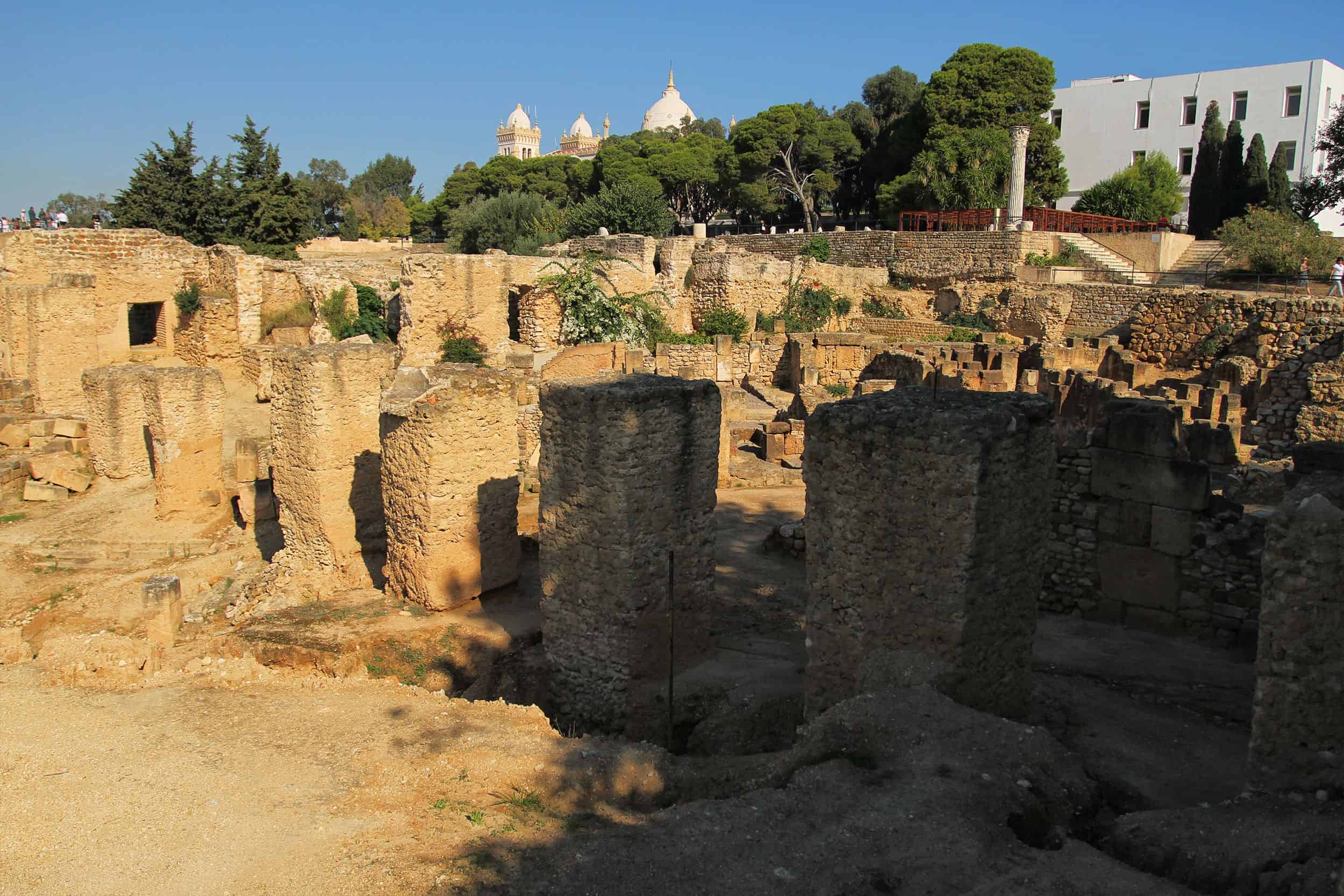
- Byrsa Hill: The ancient acropolis featuring the Carthage National Museum, Punic residential quarter, and panoramic views across the Gulf of Tunis
- Punic Ports: Circular naval harbor and rectangular merchant harbor showcasing Carthaginian maritime engineering
- Tophet of Salammbô: Sacred Punic sanctuary containing thousands of urns, offering insights into Carthaginian religious practices
- Roman Villas: Luxurious residential areas with stunning mosaic floors depicting mythological scenes
- Roman Theater: Reconstructed 2nd-century theater still hosting summer performances
- Amphitheater: Once seating 35,000 spectators for gladiatorial contests
The archaeological evidence at Carthage represents layers of occupation spanning nearly 3,000 years, making it one of the Mediterranean’s most complex historical sites.
The Antonine Baths: Rome’s Grandest Spa Complex
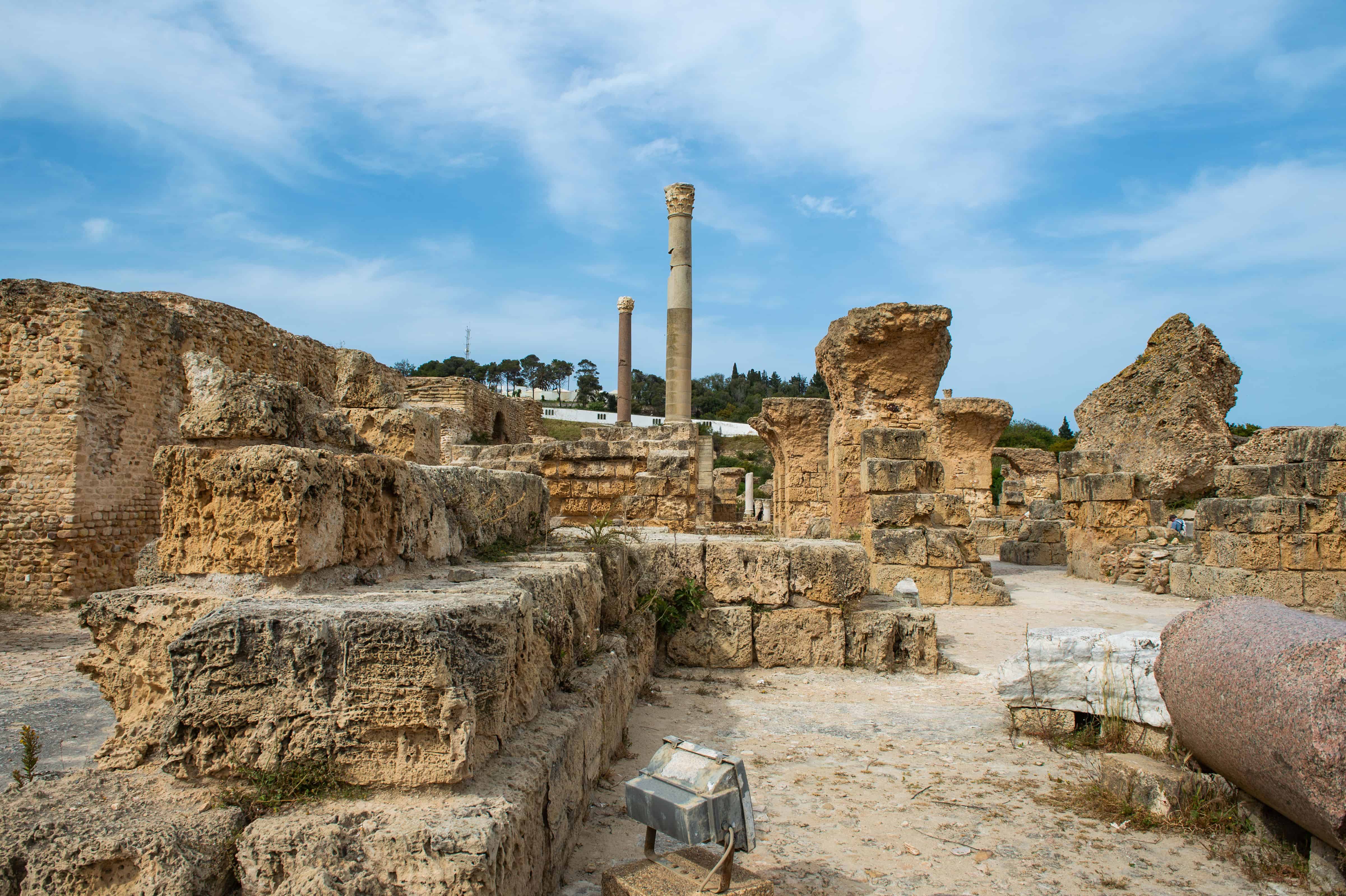
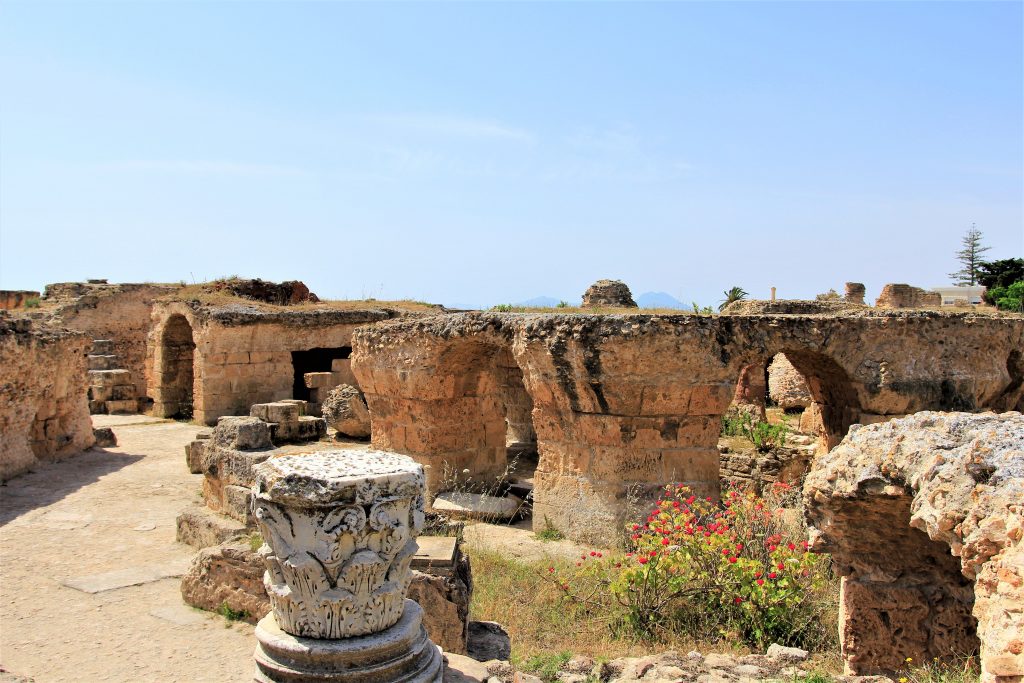
The Antonine Baths stand as Carthage’s most impressive Roman monument. Built during Emperor Antoninus Pius’s reign (138-161 CE), this bathing complex stretched over 3.5 hectares along the Mediterranean shore. Only Rome’s Baths of Trajan and Diocletian surpassed it in size.
Visitors can explore the frigidarium (cold room), tepidarium (warm room), and caldarium (hot room), along with underground service tunnels where enslaved workers maintained the hypocaust heating system. The site’s massive granite columns, imported from Egypt, hint at the complex’s original splendor.
Standing among these ruins, with the Mediterranean stretching to the horizon, offers profound historical perspective. The baths functioned not just for bathing but as social hubs where Romans conducted business, exercised, and socialized—essential to understanding daily life in provincial Roman Africa.
Visiting Carthage in 2026: Practical Travel Tips
Planning your visit requires understanding the site’s geography and logistics. This Carthage Tunisia history guide recommends dedicating a full day to properly explore the archaeological zones, though a half-day covers the highlights.
Transportation and Access
Carthage lies just 15 kilometers northeast of Tunis. The TGM light rail connects downtown Tunis to multiple Carthage stations (Carthage-Hannibal, Carthage-Byrsa, Carthage-Dermech), making site-hopping convenient. Taxis and organized tours offer alternatives for those preferring guided experiences.
The single entrance ticket costs approximately 12 Tunisian dinars (around $4 USD as of 2026) for all sites. Students with valid ID receive discounts. Photography is permitted, though tripods require special authorization at some locations.
What to Bring
- Comfortable walking shoes—the sites involve significant walking on uneven ancient stones
- Sun protection (hat, sunscreen, sunglasses)—shade is limited among the ruins
- Water bottle—stay hydrated, especially during summer months
- Light layers—Mediterranean breezes can be cool even in warm weather
For travelers exploring broader North African adventures, our Africaning platform offers comprehensive resources for planning multi-destination itineraries across the continent.
Best Time to Visit and How to Get There
The optimal seasons for visiting Carthage are spring (March-May) and autumn (September-November), when temperatures range from 18-26°C (64-79°F). Summer brings intense heat exceeding 35°C (95°F), making extensive outdoor exploration challenging, though early morning visits remain pleasant.
Winter (December-February) sees fewer tourists and mild temperatures around 10-16°C (50-61°F), but occasional rainfall may affect visits. This Carthage Tunisia history guide suggests checking weather forecasts and planning accordingly.
Getting to Tunisia
Tunis-Carthage International Airport receives flights from major European cities, Middle Eastern hubs, and select African destinations. Most Western nationals can enter Tunisia visa-free for up to 90 days, though requirements change periodically—verify current regulations before travel.
From the airport, Carthage archaeological sites are just 20 minutes by taxi. Many visitors combine Carthage with exploring the medina of Tunis, the picturesque village of Sidi Bou Said, and other northern Tunisian attractions. Similar to planning trips to other African destinations, early research helps maximize your experience—explore our start here guide for comprehensive planning resources.
Important Note: As of 2026, enhanced security measures at major tourist sites ensure visitor safety. Tunisia has invested significantly in tourism infrastructure, with improved signage, visitor centers, and multilingual guides available at Carthage.
Frequently Asked Questions
How long does it take to visit all of Carthage’s archaeological sites?
A comprehensive visit to all major Carthage sites requires 5-7 hours. If time is limited, focus on the Antonine Baths, Byrsa Hill with the museum, and the Punic ports, which can be covered in 3-4 hours. The sites are spread across several kilometers, so factor in transportation time between locations.
Can I visit Carthage independently or do I need a guide?
Independent visits are entirely feasible with good signage in French, Arabic, and English at most sites. However, hiring a licensed guide significantly enriches the experience, as they provide historical context not available from plaques alone. Guides can be arranged through hotels, at the sites themselves, or through our contact us page for personalized recommendations.
Are there restaurants and facilities near the Carthage ruins?
Yes, several cafés and restaurants operate near major sites, particularly around Byrsa Hill and in nearby Sidi Bou Said. The Carthage National Museum has a small café. Restroom facilities are available at the museum and some larger archaeological areas, though not at every site. Plan accordingly, especially when traveling with children.
What makes Carthage different from other Roman ruins in North Africa?
Carthage uniquely preserves both Punic (Phoenician) and Roman layers of civilization. While sites like Libya’s Leptis Magna showcase purely Roman grandeur, Carthage reveals the earlier Phoenician city beneath, including the Tophet sanctuary and Punic ports. This dual heritage, combined with its legendary rivalry with Rome and strategic coastal location, creates an archaeological experience unmatched elsewhere in the region.
Is Tunisia safe for tourists visiting Carthage in 2026?
As of 2026, Tunisia welcomes millions of tourists annually, with enhanced security at major sites including Carthage. The archaeological park benefits from regular police presence and tourist police specifically trained to assist visitors. Standard travel precautions apply—stay aware of surroundings, secure valuables, and follow local guidance. For broader regional safety considerations, consult resources like our guide on North African travel safety.
Can I combine Carthage with other North African destinations?
Absolutely. Many travelers combine Tunisia with Algeria, Libya (when conditions permit), or cross to Sicily. Tunisia itself offers the Sahara desert, Roman sites like Dougga and El Jem, and Mediterranean beaches. For those planning multi-country itineraries across North Africa, our About Africaning page explains how we help design comprehensive regional journeys.
Conclusion: Your Journey Through Carthage Awaits
This Carthage Tunisia history guide has taken you through three millennia of Mediterranean civilization, from Phoenician trade empire through legendary conflicts with Rome to its rebirth as a provincial Roman capital. Walking among these ancient stones connects you directly to figures like Hannibal, whose military genius still echoes through history, and to the countless merchants, soldiers, and citizens who built one of antiquity’s greatest cities.
Carthage offers more than ruins—it provides perspective on how civilizations rise, clash, fall, and transform. The UNESCO World Heritage Site preserves this extraordinary story against the stunning backdrop of the Mediterranean Sea, accessible from modern Tunis yet timeless in its significance.
Whether you’re a history enthusiast, archaeology lover, or traveler seeking authentic cultural experiences, Carthage delivers unforgettable encounters with the ancient world. Start planning your 2026 journey today and discover why this legendary city continues to captivate visitors just as it dominated the ancient Mediterranean.
Ready to explore more of Africa’s incredible heritage? Visit our destinations page to discover additional archaeological wonders, from Egypt’s timeless monuments to Morocco’s imperial cities, and begin crafting your perfect African adventure.